【题目】 “With depressingly few exceptions, performances are dull and lack vitality…
After years of trying to convince myself otherwise, I now feel sure that ballet is dying.”
-----Jennifer Homans, Apollo’s Angels
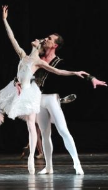
Is ballet dead? Has the art form evolved to depression? Jennifer Homans’s conclusion to her fascinating history of ballet, Apollo’s Angels, is worrying.
It appears that ballet’s pulse continues to beat strongly, however, especially with a Tchaikovsky defibrillator attached. So why are some dance commentators arguing that ballet is dying? And do they have a point?
“Ballet is dead”----“Ballet is dying” ---all ring tones of Friedrich Nietzsche’s philosophical claim: “God is dead.” Headline grabbling, certainly. Yet can ballet be defined in such black and white terms? Surely it is more abstract, filled with shades of popular grey. ①
To start with, how do you define ballet? What is ballet today? Consider popular modern classics like Twyla Tharp’s In the Upper Room, where dancers wear pointy shoes and sneakers, combining contemporary and classical vocabulary together. Or closer to home, there is Graeme Murphy’s Swan Lake, which layers elements of Petipa’s choreography(编舞) with a contemporary theme and aesthetic. Many contemporary choreographers all embrace classical form and principles, then manipulate(操纵) the rules. ② .
The line between contemporary dance and ballet is vague. In an interview with The Telegraph (2015), British choreographer Mattew Bourne acknowledges that this “cross-fertilisation” between contemporary dance and ballet continues to grow, as evidenced by the rise in new commissions from contemporary choreographers at the Royal Ballet and English National Ballet. Referring to Homans’s book, Bourne believes what has changed is that “the dance forms are coming closer together”. Not dying, but merging. Reinventing. This has been the case amongst Australasian ballet companies for many years now. ③ .
Homans writes that ballet’s decline began after the passing of Ashton and Balanchine. Something ahs changed, certainly. A stylisic transition----from neo-classical to contemporary ballet----has occurred. ④
Our art form’s evolution has always been with extinction. Prominent dance critic with The New York Times, Alastair Macaulay, says: “ballet has died again and again over the centuries,” and yet, “phoenix-like, rose again from its ashes”. History shows there were periods where ballet hibernated and lacked popularity. This coincided with the art form’s changing forums.
So here is the irony: what sells best, still, are reproductions of Petipa’s classics. A season without a Tchaikovsky score is a financial risk. And without Nutcracker(《胡桃夹子》), half the ballet companies in North America would not exist. Admittedly, as a dancer, my favourite roles---Albrecht, Prince Siegfried and Romeo----were from the classical canon; I am a traditionalist at heart (who loves to be challenged by good contemporary ballets). A part of the charm behind classical repertoire, for me, was in reproducing the glories of past greats. Classical ballet’s framework supports the modern process of bench-marking.
Perhaps Jennifer Homans’s thoughts are not completely unfounded. Perhaps ballet is dying for some. Ballet’s evolution has been delayed by its audiences. And as Homans suggests in her epilogue, perhaps also by its creatives.
Now here is a bold prediction. In line with the Royal Ballet’s programming in Brisbane this year----of Christopher Wheeldon’s The Winter’s Tale, and Wayne MacGregor’s Woolf Works----over the next 20 years, ballet’s reliance on Petipa will decrease. Contemporary ballets and merge-styled ballets will produce their box-office influence ever more.
Why?
It is simple: our audiences will be ready for ballet to change again.
【1】Why does the writer cite Jennifer Homans’s words at the beginning of the passage?
A. To support the writer’s viewpoint.B. To introduce the topic of the passage.
C. To highlight the theme of the passageD. To provide the background knowledge.
【2】The sentence ‘Is this not ballet?” should be put in ______.
A. ①B. ②
C. ③D. ④
【3】Which of the following statements is a fact about ballet?
A. “Surely it is more abstract, filled with shades of popular grey.” (Para.3)
B. “The line between contemporary dance and ballet is vague.” (Para.5)
C. “Our art form’s evolution has always been with extinction.” (Para.7)
D. “What sells best, still, are reproductions of Petipa’s classics.” (Para.8).
【4】According to Matthew Bourne, _____.
A. the dance forms remain unchanged
B. contemporary dance has reinvented classic ballet
C. ballet is experiencing growth and will continue to develop
D. a new form of ballet is widely accepted among Australians
【5】The writer takes himself as an example in Paragraph 8 in order to show _____.
A. classics should be promoted
B. classics are still of great significance
C. classical ballet’s framework is out of date
D. contemporary ballets attract more audiences
【6】What may be the audiences’ attitude to the change of ballet?
A. Supportive.B. Arbitrary.
C. Critical.D. Concerned
在线课程【答案】
【1】B
【2】B
【3】D
【4】C
【5】B
【6】A
【解析】
这是一篇议论文。文章主要探讨了芭蕾舞兴衰的话题。
【1】细节理解题。文章在开头引用Jennifer认为芭蕾在衰落,是希望引出本文探讨的芭蕾兴衰的话题,起到引入话题的作用,因此选B。
【2】推理判断题。由于插入的句子“Is this not ballet”可知,前文应当是提到一种舞蹈,而第2处前讲的就是现在当代编舞者都运用一定的规则将古典融入现代舞蹈中。可知应当选B。
【3】推理判断题。题目问的是哪一项是确凿的事实。而在第八段作者通过种种客观事实举例论证了,人们仍然偏爱经典。其余选项虽然是文中所提到的,但都是人们抽象的主观推测,并不是客观的确凿事实。
【4】细节理解题。在本文第五段第二行,Matthew认为在现代舞与芭蕾之间的互相滋养是增长的,例如芭蕾界委任了现代编舞家。而本段实际上就是在讲人们可能只认为现代舞发展,实际上芭蕾也在发展,现代舞和芭蕾难以割舍。因此选C。
【5】细节理解题。
【6】推理判断题。在倒数第三段“ballet’s reliance on Petipa will decrease”及最后一段 our audiences will be ready for ballet to change again可知,作者认为将来芭蕾不再那么依赖经典,并且观众们是准备好迎接它的再次改变了,因此芭蕾会更好地发展,选A。