【题目】 Ray Tokuda, a 54-year-old Japanese American, is proud of the title his school has given him. He is a Shifu, a Chinese word literally meaning a master, mentor or senior practioner of martial arts.
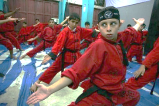
Tokuda has reason to be proud. He has been involved with Chinese martial arts for almost four decades. After learning them at the martial arts school in New Mexico State, today he is among the most experienced kung fu teachers of the school.
Practicing martial arts two to three hours and helping students improve their skills have become Tokuda’s daily routine. He expects to practice and teach martial arts for the rest of his life. “I’m still learning. It’s worth more than a lifetime to learn Chinese martial arts,” he said. “Once I started, I just couldn’t stop. I think it’s also the magic of Chinese culture.”
Tokuda was sent to the martial arts school when he was 10. He still remembers how unwilling he was when starting out. “My father had always wanted to learn Chinese martial arts but never got the chance, so he put his kid in,” he said. “I was so afraid at that time because I thought kung fu was all about fighting.”
But things changed after he learned that martial arts were more than punching and kicking.
“One of the things martial arts teach me is overcoming adversity,” Tokuda said. “As a little kid, my first lesson was like, oh, look, this is a thing that I can get through by diligence, perseverance(毅力) and dedication, and that was priceless for my life.”
Learning Chinese martial arts opened a gateway for him to better understand Chinese culture because he could hear a lot of ancient Chinese kung fu-related stories. “It is like in America, where we hear stories about knights in shining armor and King Arthur and noble deeds done,” he said. “I feel martial arts preserve something of ancient China that can’t be found in books. They are sort of an oral history.”
Tokuda has also been invited to various events in his home state to showcase traditional Chinese culture, including the dragon dance and lion dance, which he also learnt at the martial arts school. Because of this, he is now considered a cultural envoy (使者) in the eyes of the public.
【1】Tokuda didn’t want to learn kung fu because he had thought it was ________.
A. practicalB. magical
C. violentD. difficult
【2】From the passage, what can we learn about Tokuda?
A. He learnt martial arts from his father.
B. He is the founder of the kung fu school.
C. He learnt from martial arts how to deal with difficulties.
D. He is the most experienced kung fu teacher of his state.
【3】Which of the following words can best describe Tokuda?
A. Modest and friendly.B. Devoted and persevering.
C. Talented and humorous.D. Motivated and considerate.
在线课程【答案】
【1】C
【2】C
【3】B
【解析】
本文是一篇记叙文。文章主要讲述中国功夫让一位日裔美国人成为中国文化使者,帮助传播中国传统文化——武术。
【1】细节理解题。根据文章第四段I was so afraid at that time because I thought kung fu was all about fighting.可知,那时,Tokuda以为功夫就是打斗,是暴力。故选C。
【2】推理判断题。根据文章第六段“One of the things martial arts teach me is overcoming adversity,” Tokuda said. “As a little kid, my first lesson was like, oh, look, this is a thing that I can get through by diligence, perseverance(毅力)and dedication, and that was priceless for my life.”可知,Tokuda认为,武术教他的一件事就是克服逆境,从而可以推断出他从武术中学会了如何处理困难。故选C。
【3】推理判断题。根据文章第二段Tokuda has reason to be proud. He has been involved with Chinese martial arts for almost four decades. Tokuda从事中国武术近40年,可以推断他的坚持;文章第三段Practicing martial arts two to three hours and helping students improve their skills have become Tokuda’s daily routine. He expects to practice and teach martial arts for the rest of his life. 帮助学生提高技能已经成为Tokuda每天的例行公事,他希望在他的余生中练习和教授武术,可以推断他对自己事业的热爱与奉献。故选B。
文章内容较为简单,集中考查细节题,对此类题型,考生可以首先从问题中找到关键词然后以此为线索,运用略读及查阅的技巧在文中迅速寻找这一细节找到后再把这一部分内容仔细阅读一遍,仔细比较所给选项与文中细节的细微区别。如小题1选择项的violent,到文章第四段I was so afraid at that time because I thought kung fu was all about fighting找到关键词fighting。所以我们考生要通过比较这些细微区别,仔细辨别才能得出答案。