【题目】 The tall manchineel tree that is native to the Caribbean, Florida, South America, Central America and the Bahamas, looks particularly attractive. But you may be wise to notice the warning given that the tree holds the Guinness World Record for “the world’s most dangerous tree”.
The deadliness begins with the sweet-smelling fruit. As British radiologist Nicola Strickland and her friend discovered, even a single bite of the green apple-like produce can lead to hours of suffering. The scientist says within minutes of eating the fruit, she and her friend experienced “a strange peppery feeling” in their mouths. A few hours later, the two could barely swallow any solid food. Fortunately, the symptoms started to reduce after about eight hours and the fruit did not cause any long-term damage.
Many plants have poisonous bark and leaves to prevent grass-eating animals. However, the fruits are usually edible allowing animals to feed on them or carry seeds to help with reproduction. But since the manchineel fruits are largely transported by ocean tides, the tree does not need help to reproduce.
The tree’s thick and milky white sap (树液) is equally dangerous. Contact with the skin can lead to symptoms that range from headaches to respiratory(呼吸) problems. Exposure to the eye can even cause “temporary painful blindness”. Given that the sap’s most dangerous toxin is highly water soluble, experts advise not using the tree for shade during a rain shower, as raindrops carrying the sap could easily burn your skin.
The fear has resulted in almost destroying the tree in Florida where it is on the list of endangered species. While removing it altogether may seem like the logical solution, experts argue that the manchineel trees are important for local ecosystems. In addition to protecting against ocean winds, the dense manchineel trees also prevent ocean erosion in Central America. The tree’s wood is very popular with Caribbean carpenters who have learned to neutralize its poisonous sap by drying the bark in the sun. In Central and South America, the locals use the bark to treat body swelling caused by injury and infection.
【1】Which of the following best explains “edible” underlined in Paragraph 3?
A.Fit to eat.B.Easy to pick.C.Hard to find.D.Nice to look at.
【2】Which of the following about the manchineel tree is true?
A.Its fruits taste sweet.
B.It reproduces by ocean tides.
C.Your eyes may be blind at the sight of it.
D.You have difficulty breathing in its shade.
【3】What is mainly talked about in the last paragraph?
A.The medical use of the manchineel trees.
B.The important role of the manchineel trees.
C.The urgent need of protecting the manchineel trees.
D.The way of removing poisonous sap from the trees.
【4】Which of the following can best show the structure of the passage?
A.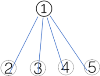 B.
B. C.
C. D.
D.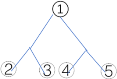
【答案】
【1】A
【2】B
【3】B
【4】B
【解析】
本文是说明文,介绍了一种进入吉尼斯世界纪录的“世界上最危险的树”——毒番石榴树,分别介绍了这种树的果实、汁液的危险性。这种树虽然有毒,但是有着极大的作用。
【1】词义猜测题。根据第三段的allowing animals to feed on them or carry seeds to help with reproduction可知,动物以这种树的果实为食,或携带种子帮助繁殖。因此它的果实通常是可食用的。edible 意为:可食用的。 故选 A 项。
【2】细节理解题。从第三段的:But since the manchineel fruits are largely transported by ocean tides, the tree does not need help to reproduce可知 ,由于这种树的果实主要是由海洋潮汐带到其他地方的,所以这棵树不需要外界的帮助来繁殖。故选B。
【3】细节理解题。根据最后一段中In addition to protecting against ocean winds, the dense manchineel trees also prevent ocean erosion in Central America. The tree’s wood is very popular with Caribbean carpenters who have learned to neutralize its poisonous sap by drying the bark in the sun. In Central and South America, the locals use the bark to treat body swelling caused by injury and infection可知这种树的重要作用: 这种树除了能够保护不受海洋风的侵袭,还能防止中美洲的海洋侵蚀;木材很受加勒比木匠的欢迎,他们学会了通过在阳光下干燥树皮中和有毒的汁液;在中美洲和南美洲,当地人用树皮来治疗因受伤和感染引起的身体肿胀。故选 B 项。
【4】主旨大意题。第一段介绍了这种树是“世界上最危险的树”,中间第二、三、四三段分别介绍了这种树的果实、汁液的特点和危险性,最后一段介绍了这种树的用途。第一段是总述,第二、三、四三段是并列关系,最后一段是总结概括段。故选 B 项。
阅读理解篇章结构题做题方法:
阅读理解的题目能全面地、深层次地考查考生的阅读理解能力。此类题主要是针对文章的整体篇章结构或某一段落的展开层次所设置的问题。高考对文章结构的考查主要涉及两个层次:一是按段落的组织方法理解文章的结构;二是按写作手法(论证方法)理解文章的结构。设问形式常有:
(1)Which of the following shows the development of ideas in this passage?
(2)Which of the following shows the organization/structure of the (whole) passage?
因此这类题的解题方法也分为两种,如下图所示:
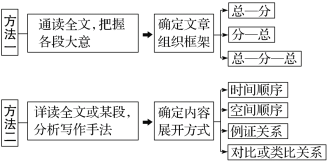
注意:
1.文章的段落组织通常采用“总—分;分—总;总—分—总”的框架;
2.内容的展开常采用以下方式:
时间顺序:按时间先后顺序说明某一事物的发展情况;
空间顺序:按照事物的空间结构顺序进行描写或说明;
例证关系:所列举的事物用来论证观点,通常是数据、事例等;
对比或类比关系:这类文章通常以对比各事物之间的共同点或差异为主。
如本文最后一题。通读全文后,把握各段大意,尤其注意每段首句,会发现首句就是每段的主题句。第一段介绍了the manchineel tree是吉尼斯世界记录的“世界上最危险的树”,是全文的总述;第二、三、四段介绍树的果实和汁液的危险性,是分述两个方面;第五段介绍了这种树的用途,又是总述。所以这篇文章是“总—分—总”结构,故B选项图例符合文章结构。